How Do Contact Lenses Work? A Comprehensive Guide to Vision Correction
Contact lenses have revolutionized vision correction, offering a convenient alternative to traditional eyeglasses. Millions of people worldwide rely on contact lenses to improve their eyesight while enjoying the freedom of unobstructed vision. Understanding how contact lenses work involves exploring their design, function, and the science behind vision correction.
At their core, contact lenses are thin, curved discs that are placed directly on the surface of the eye, specifically on the cornea. This positioning allows them to refract light in a way that compensates for various vision issues, such as nearsightedness (myopia), farsightedness (hyperopia), and astigmatism. Unlike eyeglasses, which sit a short distance from the eyes, contact lenses provide a more natural field of view, eliminating peripheral distortion and improving overall visual acuity.
The effectiveness of Come funzionano le lenti a contatto is rooted in the principles of optics. When light enters the eye, it must be correctly focused onto the retina, the light-sensitive layer at the back of the eye, to produce clear images. If the eye's shape is irregular or the cornea has an improper curvature, the light rays may not focus correctly, leading to blurred vision. Contact lenses address this issue by altering the path of incoming light. By adjusting the way light is refracted, they help focus images precisely on the retina.
Contact lenses come in various types and designs to meet individual vision needs. The most common types include soft contact lenses, rigid gas permeable (RGP) lenses, and specialized lenses for specific conditions. Soft contact lenses are made of flexible, hydrophilic materials that conform to the shape of the eye. They are comfortable to wear and allow oxygen to pass through to the cornea, promoting eye health. RGP lenses, on the other hand, are made of harder materials that offer excellent vision correction, especially for conditions like astigmatism. Although they may take longer to adapt to, RGP lenses provide crisp, clear vision and are durable.
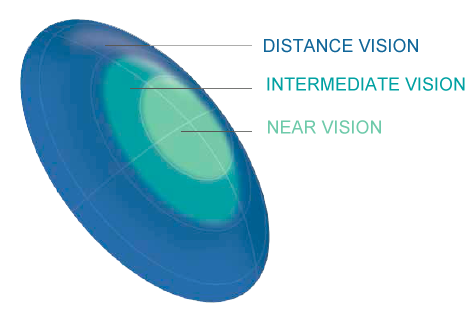
For those with specific vision issues, specialized contact lenses are available. For example, toric lenses are designed for astigmatism, featuring different powers in different meridians to correct the uneven curvature of the cornea. Multifocal lenses allow wearers to see clearly at various distances, accommodating presbyopia, a common age-related vision change. Additionally, scleral lenses, which are larger and vault over the cornea, can provide comfort and correction for individuals with irregular corneas or severe dry eye conditions.
Proper care and maintenance of contact lenses are essential for maintaining eye health and ensuring optimal vision. Regular cleaning and disinfecting are crucial to prevent infections and complications. Users should follow the recommendations provided by their eye care professionals, which may include replacing lenses daily, bi-weekly, or monthly, depending on the type of lenses prescribed. Moreover, adhering to recommended wearing schedules and avoiding sleeping in lenses not designed for overnight wear can significantly reduce the risk of complications.
Before being fitted for contact lenses, individuals undergo a thorough eye examination and assessment by an eye care professional. This evaluation determines the appropriate lens type, size, and curvature based on the individual's unique eye shape and vision needs. Factors such as lifestyle, occupation, and personal preferences also play a role in the selection process, ensuring that the chosen lenses align with the wearer's daily activities.
While contact lenses offer numerous advantages, they are not without challenges. Some wearers may experience discomfort, dryness, or irritation, particularly if they wear lenses for extended periods. However, advancements in contact lens technology have led to the development of lenses that incorporate moisture-retaining materials, enhancing comfort and reducing dryness. Regular follow-ups with eye care professionals can help address any issues and ensure that lenses continue to provide optimal vision correction.
In summary,
contact lenses are a remarkable solution for vision correction, leveraging the
principles of optics to enhance visual clarity and comfort. By sitting directly
on the eye's surface, they provide a wide field of view and address various
vision issues with precision. With proper care, maintenance, and regular eye
examinations, contact lenses can significantly improve quality of life for
those who rely on them. Whether for sports, daily activities, or aesthetic
preferences, contact lenses offer a versatile and effective means of achieving
clearer vision.
Comments
Post a Comment